
Why it wins, and the plan to buy
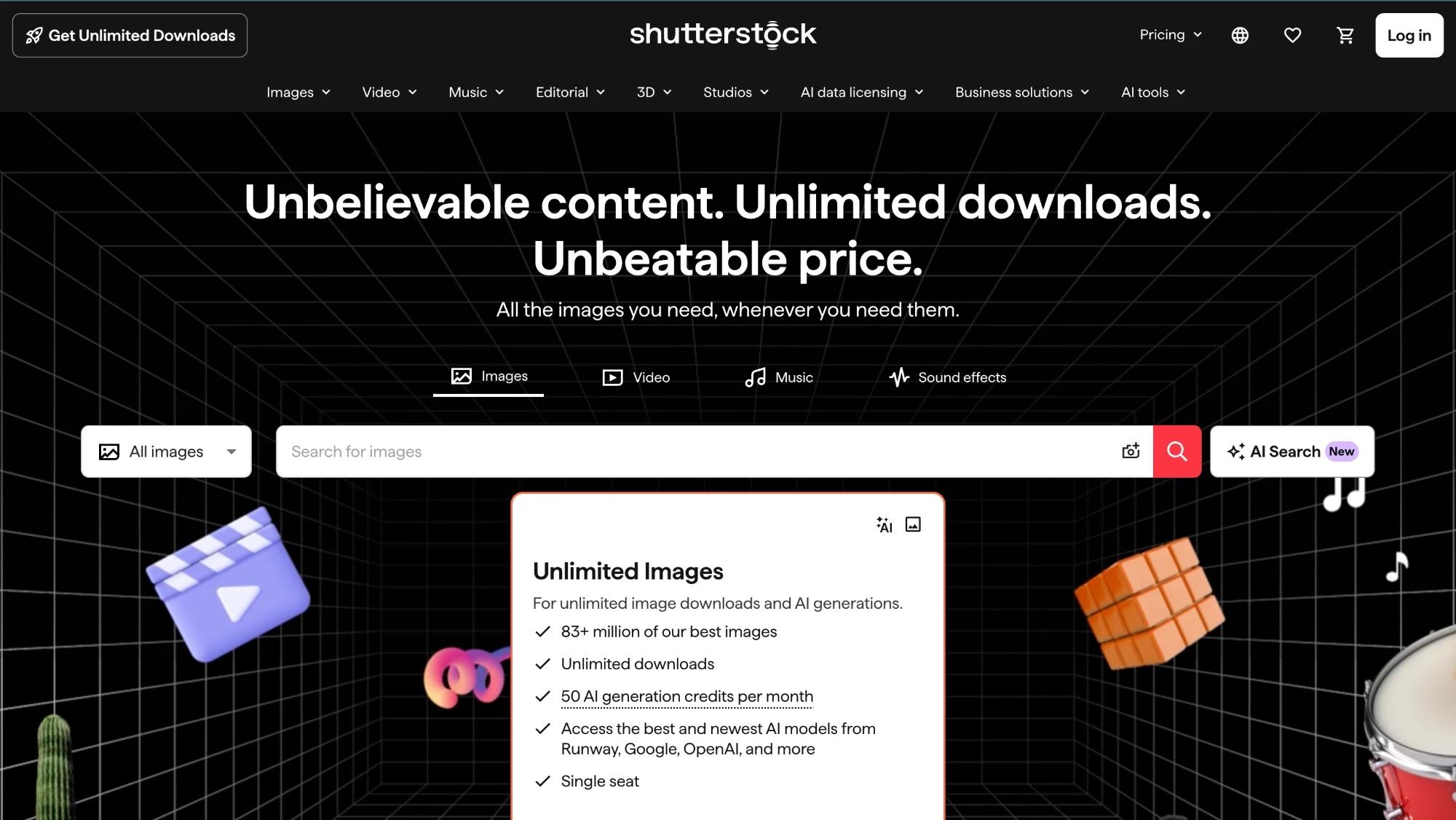
Shutterstock is the best general stock library in our comparison, at 8.3 under how we rate, and the plan most people should buy is not the one they reach for.
Ten images a month is $300 for twelve months. Unlimited Images is $348. The gap is forty-eight dollars a year, four dollars a month, and it buys you out of counting.
That is the whole recommendation. If there is any month in the next twelve in which you might need an eleventh image, Unlimited Images is cheaper than the plan sold as the starter.
The licence behind it is the most precisely written in the set. Where other vendors say "large print runs" or "broadcast", Shutterstock gives numbers: 500,000 printed copies, 500,000 out-of-home impressions, video budgets under $10,000. You can tell from the page whether your use fits.
Unlimited, at the vendor's own limit
"Our unlimited downloads subscriptions come with unlimited downloads, but for security reasons, we limit daily downloads to 100 assets."
For almost anybody, a hundred a day is unlimited. It is worth knowing only because the word is on the plan card and the number is in the FAQ.
Use it or lose it, every month
This is the term that separates Shutterstock from every rival that sells a monthly allowance.
Subscription downloads "must be used within the month and do not roll over into the next month." Adobe Stock keeps unused credits for a year, Dreamstime up to 5,000, iStock up to 250 a month. Shutterstock keeps nothing.
On the ten-a-month plan, a quiet August is ten images you paid for and will never get. On Unlimited Images the problem disappears, which is a second reason to buy it.
The exit costs half
Every individual plan on the US pricing page is an annual commitment. You can stop auto-renew at any time to avoid the next year. Leaving the current one early is different: "you will be charged 50% of the remaining subscription cost, unless local law requires us to give you the option to cancel and receive a refund."
Cancel Unlimited Images after three months and you owe half of the remaining nine. Adobe Stock has the same structure after its first fourteen days. Dreamstime's monthly plan has no commitment at all, which is the honest alternative if you are not sure.
Standard against Enhanced, and when the jump is worth it
Standard covers most marketing work and stops at merchandise, templates for sale, and the numeric limits above. It also stops at $10,000 of indemnity per image.
Enhanced removes the limits on reproductions and budget, permits merchandise and digital templates for sale, and raises the indemnity to $250,000 per image, level with Dreamstime's extended licences for the highest published figure here. For a national ad campaign, that cover is worth more than the images. Neither licence allows use in a logo or trademark, and neither allows AI training.
Packs are the expensive way in
Image packs, for one-off projects, start at two downloads for $29 and stay valid for twelve months. That is $14.50 an image. Dreamstime sells three for $14.99.
A pack makes sense in exactly one situation: you need one or two Shutterstock images for a single job and nothing for the rest of the year. Beyond that, the annual plans are far cheaper per image, as long as you will keep using them for twelve months.
One seat means one person
Every individual plan is "a single seat license authorizing one natural person". Two people searching and licensing from one login is outside it.
Teams and Enterprise plans fix that: up to ten members who can each license and use content, storage to a company DAM, single sign-on and access to unwatermarked previews for comps. Shutterstock does not publish the price. If more than one person in your company buys stock, ask for the quote before signing two individual annual contracts you cannot leave.
Who should look elsewhere
If you buy a few images in some months and none in others, Dreamstime costs less and lets the unused ones wait. If you design inside Photoshop all day, Adobe Stock earns its higher price there. If you need nothing more than a background for a blog post, start with Unsplash, which is free.
Prices, licence limits and cancellation terms on this page were read from the Shutterstock pricing page and licence on . Subscription prices are the US annual figures. We did not test the service.