
You are not buying a chatbot, and that is the whole review
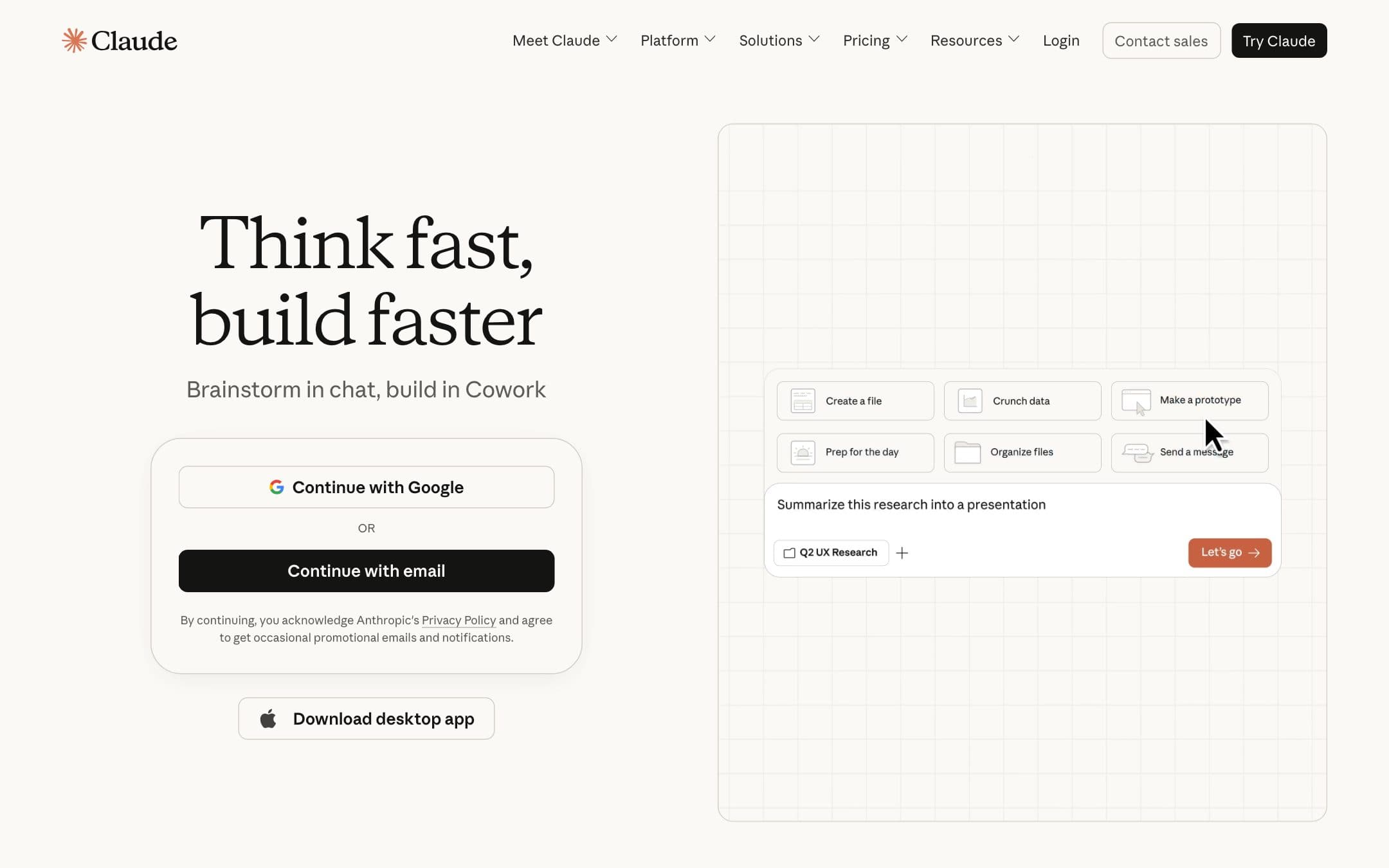
Every Claude review scores the chat window. The chat window is the least interesting thing in the subscription. One paid plan at $20 per month, or seventeen on annual billing, carries a terminal coding agent called Claude Code, an agentic desktop worker called Cowork that reads and writes your local files, a Chrome extension that clicks and types on pages you are signed in to, and add-ins for Excel, PowerPoint and Word. Outlook is still in beta. Everything except Outlook is generally available on every paid plan.
That is the comparison nobody is running. Against ChatGPT at twenty dollars, the question is not which model writes a better paragraph. It is whether you want a coding agent and a document agent inside the same subscription, or whether you would rather not pay for them.
One allowance, four ways to empty it
Anthropic states that usage across claude.ai, Claude Code and the desktop app counts towards the same limit, and that working on tasks in Cowork consumes more of your allocation than chatting does. We compared the published documentation rather than metering our own usage. The consequence is the same either way: the tools that make the plan worth buying are the tools that empty it fastest.
Every allowance is a multiple of another allowance
Here is the thing to plan around. Anthropic tells you the shape of the limits and never the size. The session resets every five hours. A weekly cap sits on top of it, applied across all models, with a reset time that varies by account. Pro is described as at least five times the free plan per session, Max at one hundred dollars as five times Pro, Max at two hundred dollars as twenty times Pro.
Five times what, though. Nowhere in the help centre does a plan state a number of messages, and the allowance moves with conversation length, attached files, the model and the effort level you pick. The honest summary is that you can compare the plans to each other precisely and compare any of them to your own workload not at all. That is the reservation behind the score under how we rate: 8.4.
The escape hatch is worth knowing, because no competing review mentions it. Pro and both Max tiers can buy usage credits at standard API rates when the allowance runs out. Running over on a busy week costs you money rather than a tier upgrade you keep paying for every month afterwards.
When Max earns the extra eighty dollars
Max is the same product at a higher ceiling. Same tools, same models, more room. The honest test is what you were doing when you hit the wall.
If you hit it in chat, you are unusual and Max at one hundred dollars will fix it. If you hit it in Cowork or Claude Code, expect to keep hitting it, because agentic runs consume the pool in a way that chat does not. That is an argument for Max, and also an argument for buying credits first and watching what a heavy week actually costs before committing to a plan that is five times the price of Pro.
Who owns what you type, and for how long
On Free, Pro and Max this is a setting you choose rather than something buried. Leave model training on and your conversations carry a five year retention period. Turn it off and retention drops to thirty days, and the setting can be changed at any time in privacy settings.
Team, Enterprise and API usage is the other way round. Content is not used to train models by default, Enterprise adds audit logs, role based access and custom retention controls, and there is a HIPAA ready offering for organisations that need one.
The practical reading is the same as everywhere else in this category. A five year retention attached to a default is a long time, and if the work is confidential the plan matters more than the setting.
Where a team stops paying per person
Two Pro subscriptions cost forty dollars a month and give you no admin console, no single sign on and no guarantee about training. Two Team standard seats cost fifty dollars monthly, or forty on annual billing, and give you all three plus enterprise search and admin control over which connectors people can install. Seats come in two sizes and can be mixed, so the two people running agents all day take premium seats and everyone else takes standard.
That is a cleaner story than most vendors tell, and it is the point at which Claude stops competing with a chat subscription and starts competing with a software rollout.
Where a specialist still wins
Breadth is not brand voice. If the job is publishing a long series in a consistent tone, a general assistant will drift and no amount of instruction reliably fixes it. That is what Jasper is built around, and for teams producing marketing copy at volume Copy.ai does the same work for less per seat.
If publishing is the actual use case, start from the best AI writing tools for blog posts rather than from here, and read how these tools actually work before paying for any of them. Everything else we score in this category sits under AI tools.
Who should stay free
The free plan is a real assistant, not a trial. Web search, memory across conversations, file creation and code execution, extended thinking, and connectors through remote MCP are all there. What is not there is the reason to pay: Claude Code, Cowork, the Chrome extension and the Office add-ins are paid features.
So the rule is narrow. Stay free while you are typing questions into a box. Pay the moment you want something done to a file, a repository or a spreadsheet without you in the loop, and pay for Pro rather than Max until a heavy week proves you need the ceiling.
Prices, limits and plan contents on this page were checked against the vendor pricing page and help centre on .


